
Close your seed round with the right legal documents
A seed round is usually a UK startup’s first priced round, led by a seed fund or an angel syndicate. SuLe helps you model the round, prepare the term sheet, subscription agreement and disclosure letter, and update your cap table when it completes, so due diligence doesn’t hold up the close.
Trusted by 2,000+ UK founders
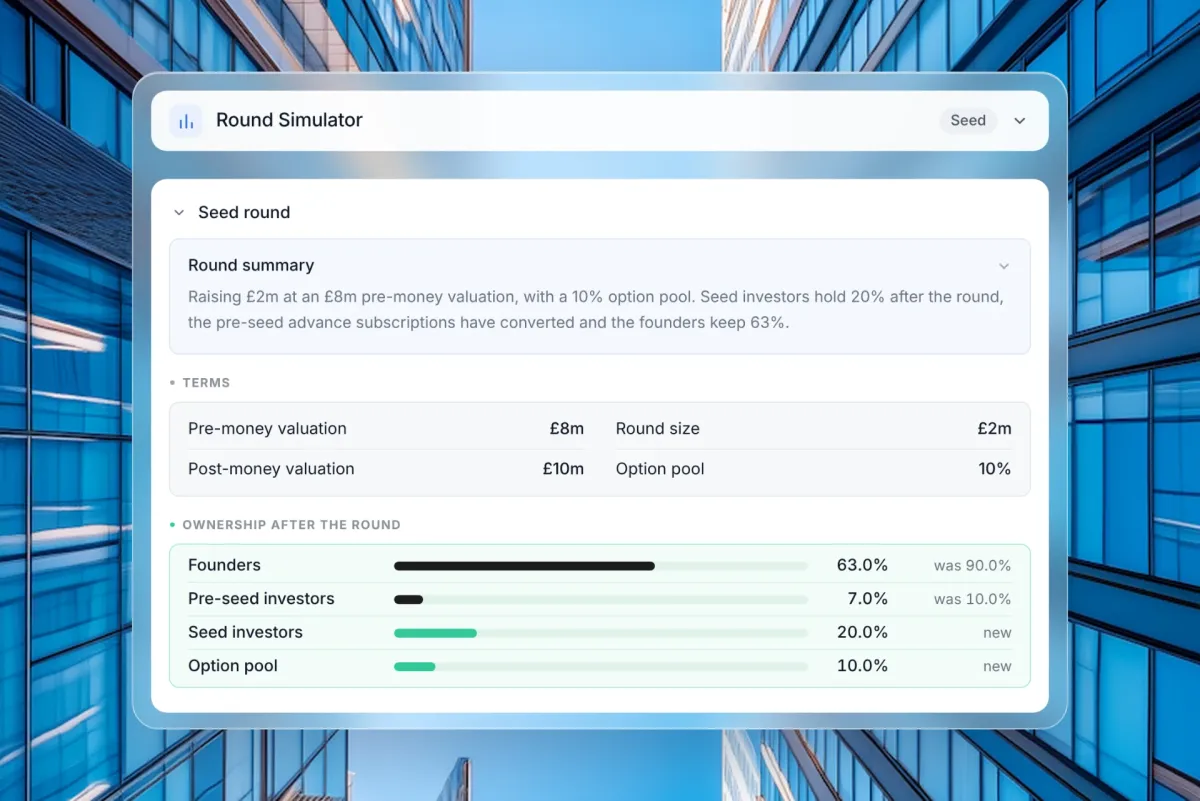
How SuLe helps you close a seed round
Model it, prepare it, close it: your seed round in the same workspace as your cap table.
1
Model the round
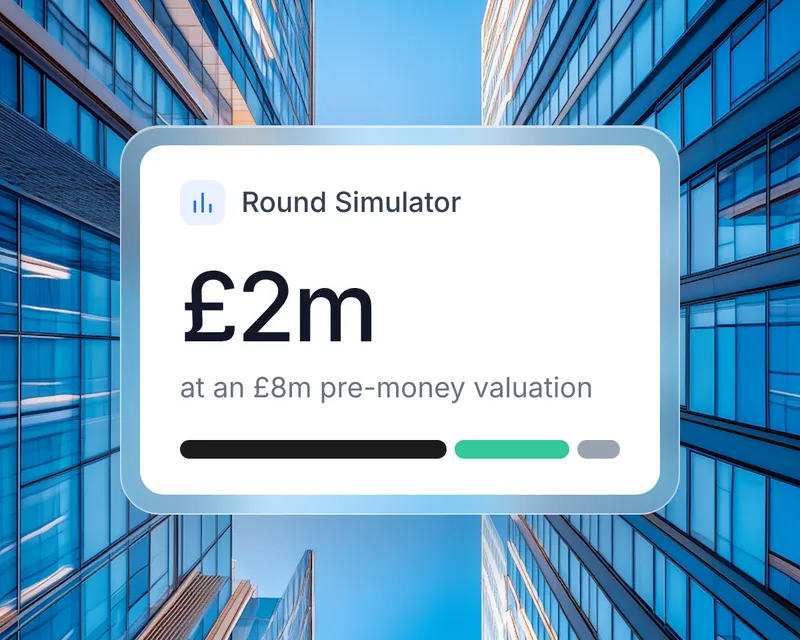
Set the pre-money valuation, round size and option pool in the Round Simulator, and see each founder’s dilution once earlier advance subscriptions convert.
2
Prepare the documents
Create your term sheet, subscription agreement and disclosure letter from lawyer-built templates, plus the board minutes and shareholder resolutions to approve the share issue.
3
Sign and close
Send documents to investors for e-signature, approve the share issue, and see your cap table update when the round completes.
Seed round checklist: what to have in place before the term sheet
Seed investors run fuller due diligence than pre-seed investors. Have these ready before you sign a term sheet and the round closes faster.
A cap table that reconciles.
Every share, option and advance subscription recorded and matching Companies House, so the pre-money numbers hold.
Advance subscriptions ready to convert.
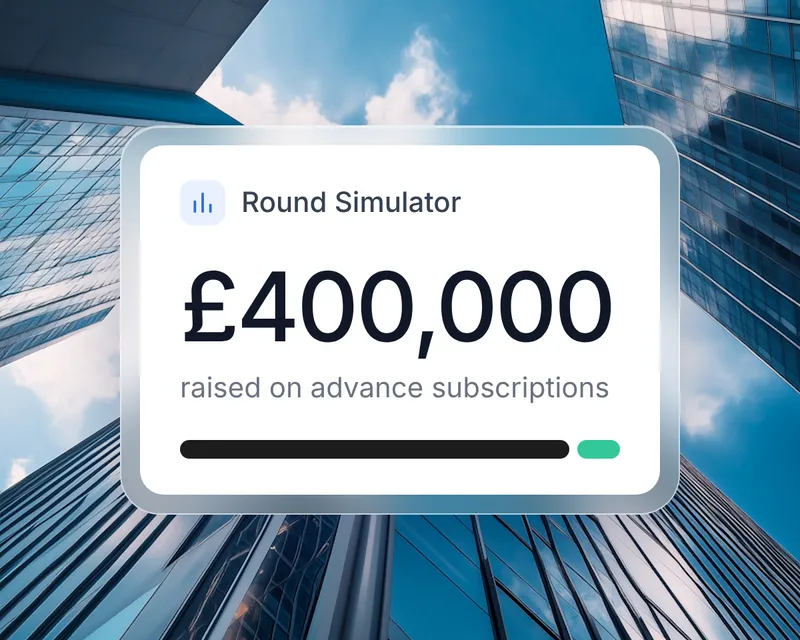
The caps and discounts from your pre-seed round tracked, so you know what converts when the round is priced.
An option pool agreed.
The size of your option pool decided before the term sheet, because investors usually want it counted in the pre-money valuation.
IP owned by the company.
Founder and contractor IP assignments signed, and employment contracts in place for the team.
Contracts investors will read.
Customer, supplier and team contracts signed and stored where you can share them.
Company records ready for due diligence.
Register of members, board minutes and Companies House filings up to date.
What a UK seed round usually looks like
Every round is different. These are common ranges for UK startups, not rules.
- Round size
- £500k to £3m
- Who invests
- Seed funds and angel syndicates
- Usual documents
- Term sheet, subscription agreement, disclosure letter
- Time to close
- Four to eight weeks from term sheet
Many seed rounds are structured to qualify for EIS, so investors can claim 30% income tax relief on what they invest.
Legal documents for a seed round
Lawyer-built templates for the documents seed investors expect to negotiate and sign.
Term sheet
Set out the valuation, round size and main terms before the full documents are drafted.
Subscription agreement
Record what each investor pays, the shares they receive and the warranties the company gives.
Shareholder resolutions
Get shareholders’ approval to issue new shares.
Share certificate
Confirm each shareholder’s ownership after an allotment or transfer.
Board minutes and resolutions
Approve the share issue and authorise the directors to sign the round documents.
Deed of adherence
Bind new shareholders to your shareholders’ agreement when they join.
When your seed round needs a lawyer
A seed round is usually your first negotiated deal. Bring in a SuLe lawyer to review the term sheet before you sign it, to answer an investor’s mark-up of the documents, or to prepare the disclosure letter. They work on the documents already in your workspace. Your plan includes monthly lawyer time; anything beyond it is a fixed fee agreed first.
Fundraising and venture capital lawyers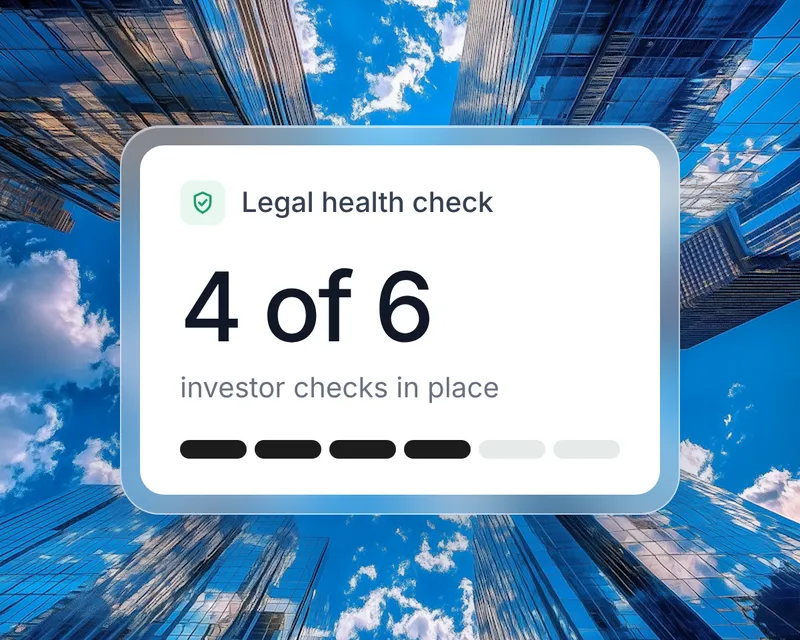
Seed round questions founders ask us
A seed round is usually a startup’s first priced funding round: investors buy new shares at an agreed valuation, instead of paying in advance for shares issued later. In the UK it typically follows a pre-seed round and is led by a seed fund or an angel syndicate, with the money going into building the team and proving the product sells.
At pre-seed, investors usually pay in advance on an advance subscription agreement and the valuation is left for later. At seed, the round is priced: you agree a valuation, issue shares and sign fuller documents, including a term sheet, subscription agreement and disclosure letter. Advance subscriptions from pre-seed normally convert into shares at this point.
Most UK seed rounds use a term sheet, a subscription agreement, a shareholders’ agreement, updated articles of association and a disclosure letter. You also need board minutes and shareholder resolutions to approve the share issue, and an SH01 filed at Companies House within a month of issuing the shares.
Commonly between 15% and 25% of the company, depending on the amount raised and the pre-money valuation. Advance subscriptions converting and a new option pool both add to founder dilution, so model the round on a fully diluted basis before you agree the term sheet.
Typically four to eight weeks from a signed term sheet to money in the bank. Due diligence and negotiating the documents take most of that time. A reconciled cap table, signed IP assignments and up-to-date company records are what shorten it.
Get your seed round ready to close
Your seed round, from first model to signed documents and an updated cap table, with a SuLe lawyer a click away.