
Get your UK startup investor-ready before you pitch
Investors check a startup’s legal basics before they commit. SuLe helps you put your shareholders’ agreement, articles and IP assignments in place, clean up your cap table and bring your company records up to date, so due diligence doesn’t slow your first raise down.
Trusted by 2,000+ UK founders
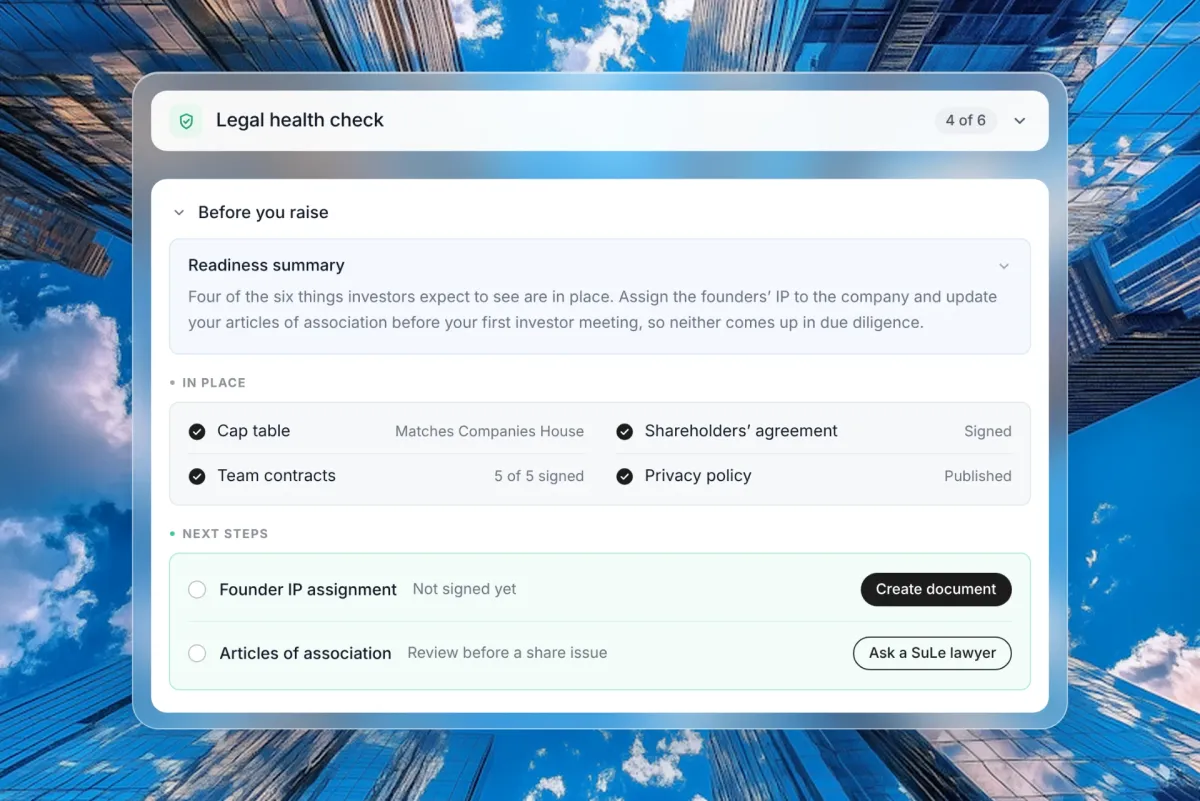
How SuLe gets your startup investor-ready
Check it, fix it, keep it: your legal documents, cap table and company records in one workspace.
1
Start your Investment Action Plan
Get your free Investment Action Plan to see which documents and company records are missing, before an investor’s due diligence finds the gaps for you.
2
Fill the gaps
Create your shareholders’ agreement, IP assignments and team contracts from lawyer-built templates, filled in with your company details.
3
Keep it in order
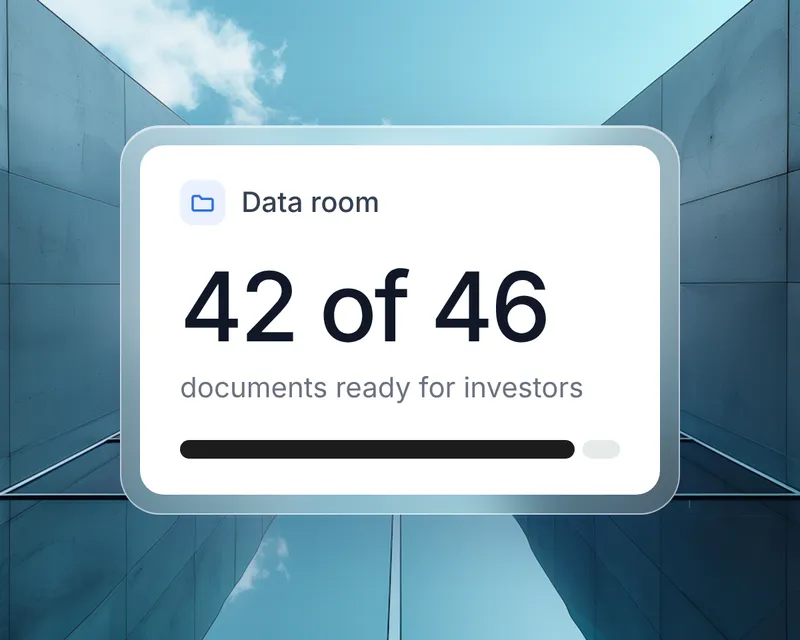
Store signed documents, keep your cap table and register of members current, and share everything with investors when they ask.
Investor readiness checklist: what investors expect to see
Before a first cheque, investors want to know the company owns what it says it owns, the cap table is accurate and the founders have agreed how it’s run.
A clean cap table.
Every share issue recorded and matching Companies House, with options and convertibles included and no informal promises of equity.
A founders’ shareholders’ agreement.
Founder vesting, leaver terms and decision-making agreed in writing.
Articles that work for investors.
Articles of association that fit your share structure and don’t stand in the way of a new share issue.
IP owned by the company.
Founders and contractors have assigned what they built to the company in writing, and employment contracts cover the rest.
Signed team contracts.
Employment contracts and consultancy agreements signed by everyone who has worked on the product.
Website policies and data protection.
A privacy policy, cookie policy and website terms that match how you actually use customer data.
What getting investor-ready involves for a UK startup
Every company starts from a different place. These are typical for UK startups preparing a first raise.
- Time to prepare
- A few weeks
- Who checks it
- Angels, funds and their lawyers
- Core documents
- Shareholders’ agreement, articles, IP assignments
- Best time to start
- Before your first investor meeting
Fixing gaps before you pitch is quicker and cheaper than fixing them in the middle of an investor’s due diligence.
Legal documents to have in place before you raise
Lawyer-built templates for the startup legal documents investors check first.
Founders agreement
Agree vesting, leaver terms and how decisions are made between founders, before investors join.
IP assignment agreement
Transfer intellectual property created by founders and contractors to the company.
Employment contract
Hire employees on terms that protect the company’s confidential information and IP.
Consultancy agreement
Engage contractors on terms that give the company ownership of their work.
Non-disclosure agreement
Protect confidential information when you talk to partners, suppliers and advisers.
Privacy policy
Explain how you collect and use personal data, in line with UK GDPR.
When getting investor-ready needs a lawyer
Most founders can put the basics in place from templates. Bring in a SuLe lawyer when your articles need changing, when shares were issued without the right paperwork, or when a former co-founder still holds equity. They work on the documents already in your workspace, so the fix is done before due diligence starts. Your plan includes monthly lawyer time; anything beyond it is a fixed fee agreed first.
Fundraising and venture capital lawyers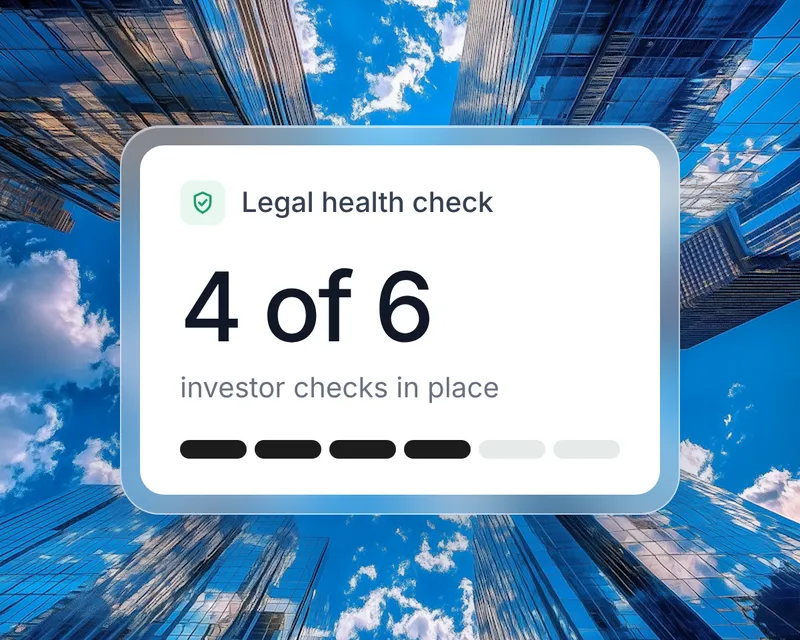

Investor readiness: questions founders ask us
Investor-ready means your company can pass an investor’s legal checks without delay. For a UK startup that usually means a cap table that matches Companies House, a shareholders’ agreement between the founders, suitable articles of association, IP owned by the company and signed contracts for everyone who has worked on the product. It’s also called investor readiness or investment readiness.
Before your first investor meeting, and ideally three to six months before you plan to raise. Most gaps take days to fix when nobody is waiting on them and weeks once they come up in due diligence. Founder vesting, IP assignments and share records are the usual places to start.
There’s no legal requirement, but most investors expect founders to have agreed vesting, leaver terms and decision-making in writing before they invest. A founders’ shareholders’ agreement sets that out. At a priced round it is usually replaced or amended by a new agreement that includes the investors.
Investors and their lawyers check that the company is properly set up and owns its product. Expect them to review your cap table and share history, articles of association, shareholders’ agreement, IP assignments, employment and contractor contracts, Companies House filings and data protection policies. How deep they go depends on the size of the round.
Usually, yes. Common problems are shares issued without board approval, a missing SH01 or share certificate, and equity promised informally. Most can be put right with the correct resolutions, filings and documents. This is one to bring a SuLe lawyer in for: the fix depends on what happened, and investors will want to see it was done properly.
Be investor-ready before investors ask
Your legal documents, cap table and company records in one place, with a SuLe lawyer a click away.