
Know exactly what you're signing. Before your lawyer bills you for it.
Upload your term sheet — we'll surface the risky clauses, explain them in plain English, and suggest redlines you can take to your investor.
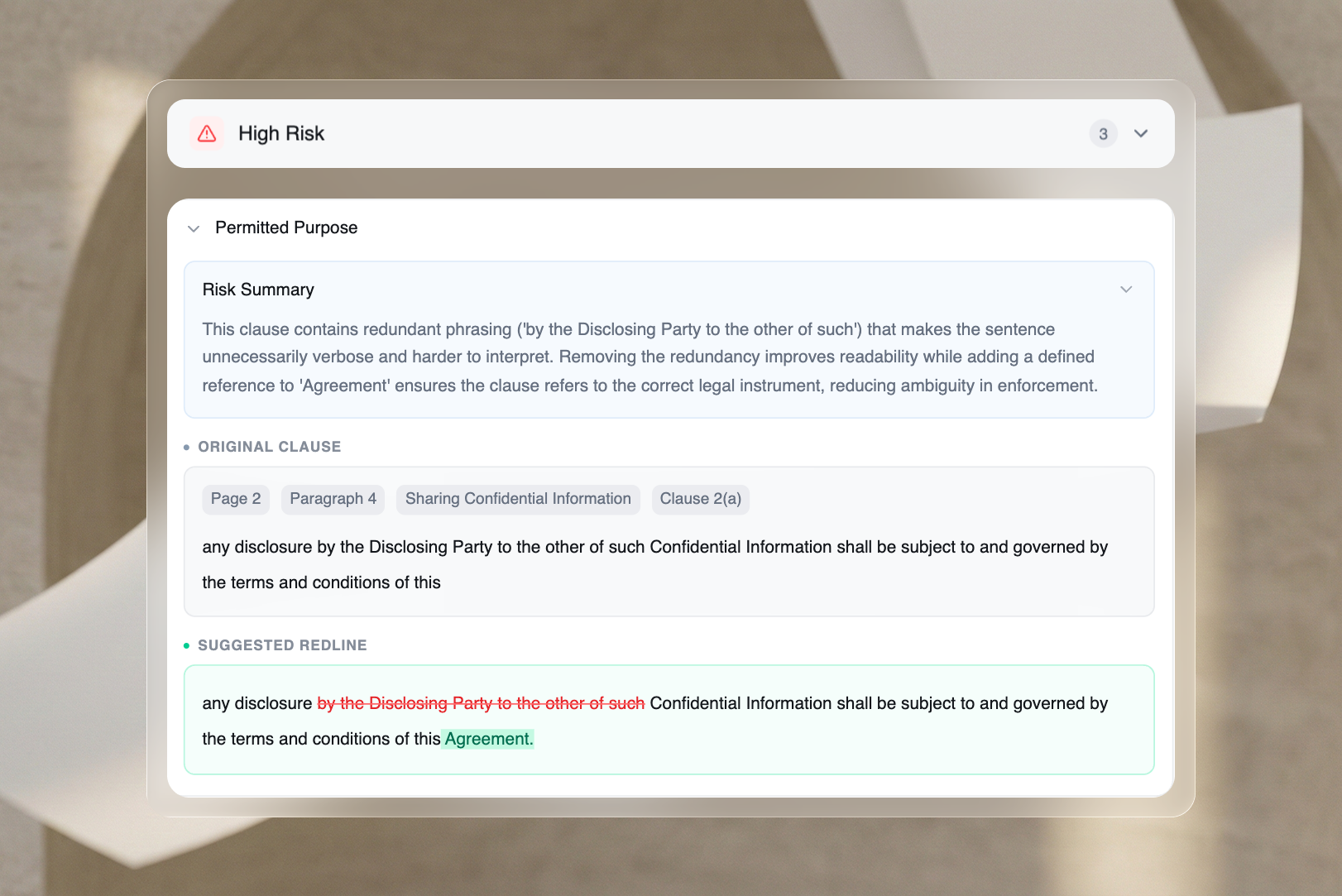
Upload your term sheet. See what to negotiate.
Drop in your term sheet. We surface risky clauses, explain what they mean, and suggest redlines you can take to your investor.
The best way to do your funding round.
Get investment-ready, build your legal documents, and access expert legal support—all on SuLe.
Sign up for freeThe things founders ask us
What can I upload?
A PDF or Word file, .pdf or .docx, up to 15 MB. That covers how term sheets almost always arrive.
Is the review free?
Yes. Upload a term sheet and you will see a finding graded by risk straight away.
Will it tell me what to change?
It flags the clauses worth your attention, grades them by risk and suggests redlines, so you go into the conversation knowing which terms actually matter.
Is this legal advice?
No. It is a first read to show you where to look. For advice on your own round, speak to a solicitor.
What if I want a lawyer to go through it properly?
Book an intro call and we will talk it through. Premium plans also include 30 minutes of lawyer time each month.
Is a term sheet legally binding?
Mostly not. Valuation, amount and rights are agreed subject to contract. But the exclusivity, confidentiality and costs clauses usually are binding, and they survive even if the deal collapses.
What does a liquidation preference actually do?
It pays the investor first on any exit, not only an insolvency — the name is misleading. A 1x non-participating preference is the usual UK institutional norm; multiples above 1x, or participating preferences, move a lot more of the proceeds away from you.
What are drag-along and tag-along rights?
Drag-along forces minority holders to sell on the same terms as the majority, so one small shareholder cannot block a clean exit. Tag-along lets them join a majority sale if they want to. Both live in your articles or shareholders agreement, not in statute.
Should I worry about anti-dilution?
It only bites on a down round, meaning a later raise at a lower price per share than the investor paid. Broad-based weighted average is the standard UK formula; full ratchet is aggressive and rare here. Many UK seed rounds on ordinary shares carry none at all.