
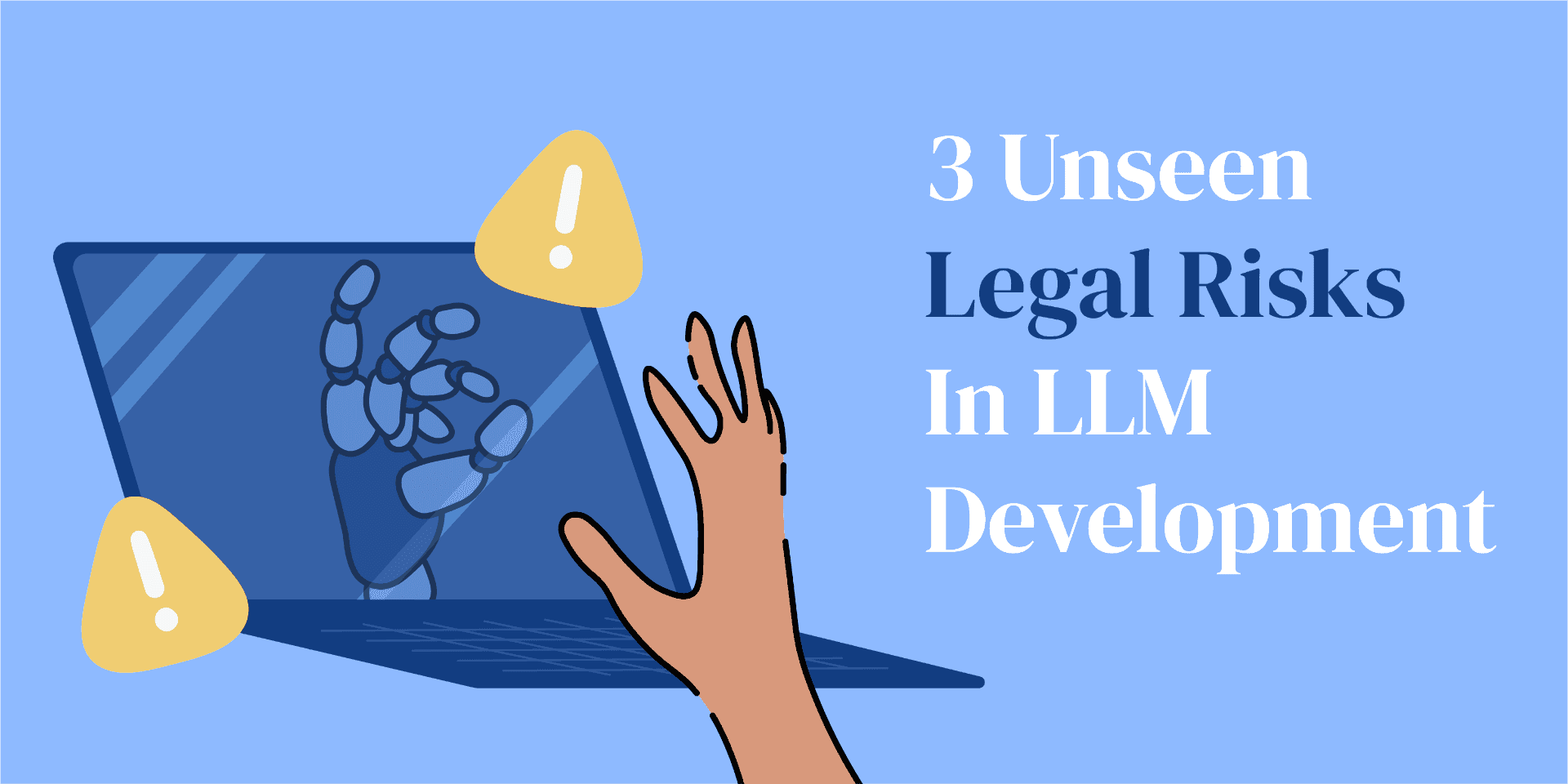
3 Unseen Legal Risks in LLM Development (And How to Avoid Them)
The rapid advancement of Large Language Models (LLMs) presents exciting opportunities for innovation—but also introduces complex legal challenges that many developers overlook. While much attention focuses on technical capabilities, the hidden legal pitfalls in LLM development can lead to costly disputes, regulatory penalties, and reputational damage if not addressed proactively.
At SuLe, we've helped numerous AI startups navigate these risks while maintaining compliance and ethical standards. In this guide, we'll explore:
- ✅ 3 overlooked legal risks in LLM development
- ✅ Practical strategies to mitigate them
- ✅ How to future-proof your AI projects
Copyright Infringement in Training Data
Developing powerful language models begins with robust training data, but many AI innovators overlook the copyright implications of their datasets. While leveraging existing content can accelerate progress, UK and EU copyright laws require careful consideration to ensure compliance. The good news? With proper planning, you can build high-performing models while respecting intellectual property rights. Many forward-thinking AI companies are turning this challenge into an opportunity by developing innovative data acquisition strategies that combine licensed material, synthetic datasets, and carefully curated open-source content. By addressing copyright proactively, you not only mitigate legal risks but also create more ethical and sustainable AI systems that stand up to scrutiny.
The Hidden Risk
While copyright concerns in LLM training pose genuine challenges, they also present an opportunity to build more robust and ethically sound AI systems. Many UK tech innovators are discovering that addressing these issues early actually strengthens their market position and investor appeal. By implementing thoughtful data governance from the outset, you're not just avoiding legal pitfalls - you're creating AI solutions with built-in compliance that stand out in an increasingly regulated landscape. Forward-thinking developers now view copyright considerations as a chance to innovate in data acquisition, leading to more sustainable and defensible business models.
Why It Matters:
- No "fair use" exemption (Unlike the US, UK copyright law is stricter)
- Database rights apply to structured datasets
- Potential liability for reproducing protected works
Real-World Example:
A UK AI startup faced a £2m lawsuit after its model reproduced verbatim content from a copyrighted medical journal.
How to Mitigate It
- ✔ Audit training data sources – Remove or license copyrighted material
- ✔ Use synthetic/cleaned datasets – Avoid direct scraping
- ✔ Implement output filters – Detect and block copyrighted text generation
Pro Tip: Consider partnering with legal experts to review your data pipeline before scaling.
Regulatory Compliance for AI Outputs
As large language models become increasingly sophisticated, regulatory compliance has transformed from a legal requirement into a competitive advantage for forward-thinking UK developers. While navigating output regulations may seem daunting, it presents an invaluable opportunity to create safer, more reliable AI systems that users and regulators can trust. The UK's evolving AI governance framework encourages innovation while protecting against potential harms - a balance that leading tech companies are embracing to differentiate their offerings.
Many successful AI startups now view compliance not as a restriction, but as a chance to:
- ✔ Enhance model reliability and accuracy
- ✔ Develop robust ethical safeguards
- ✔ Build stronger customer relationships
- ✔ Future-proof their technology
By proactively addressing output quality, bias mitigation, and content moderation, you're not just avoiding penalties - you're creating AI solutions that stand up to scrutiny in an increasingly regulated digital landscape. The most innovative teams are turning these requirements into features that demonstrate their commitment to responsible AI development.
The Hidden Risk
LLMs can generate harmful, biased, or illegal content—even unintentionally. Under the UK's Online Safety Act and EU AI Act, developers may be liable for model outputs.
Key Concerns:
- Defamatory or misleading statements
- Privacy violations (e.g., generating personal data)
- Discriminatory biases in hiring/finance applications
Case Study:
A recruitment tool using LLMs was fined £300,000 for gender-biased job descriptions.
How to Mitigate It
- ✔ Deploy content moderation systems
- ✔ Regular bias audits (especially for high-risk sectors)
- ✔ Clear disclaimers on AI-generated content
- ✔ Human-in-the-loop reviews for sensitive applications
IP Ownership of AI-Generated Content
The question of who owns content created by artificial intelligence represents one of the most exciting opportunities in modern intellectual property law. While current UK legislation maintains that purely AI-generated works can't be copyrighted, this legal landscape is creating space for innovative approaches to IP protection that forward-thinking startups are already embracing. Rather than seeing this as a limitation, savvy developers are discovering new ways to establish ownership and commercial value in their AI outputs through creative legal and technical strategies.
Many UK tech companies are turning this challenge into a competitive advantage by:
- ✔ Designing hybrid human-AI creation processes that qualify for copyright protection
- ✔ Patenting the unique technical processes behind their AI systems
- ✔ Developing contractual frameworks that secure commercial rights to outputs
- ✔ Building proprietary datasets that enhance the value of generated content
This evolving approach doesn't just solve ownership questions - it creates more robust, defensible business models that appeal to investors and acquirers. The most successful AI firms now view IP strategy not as an afterthought, but as a core component of their product development from day one. By taking proactive steps to protect and monetise AI-generated content, UK startups can position themselves at the forefront of this legal and technological revolution.
The Hidden Risk
Who owns the output of an LLM? Under current UK law:
- Human-created content = Protected by copyright
- AI-generated content = No automatic copyright (Per the UK IPO)
Implications:
- Investors may undervalue AI products without IP protection
- Competitors could replicate outputs freely
How to Mitigate It
- ✔ Hybrid human-AI workflows (Ensure human authorship)
- ✔ Patent novel AI architectures instead
- ✔ Contractual agreements with users/clients
Stat: 70% of AI startups fail to secure IP rights for their outputs.
How SuLe Can Help
At SuLe, we help UK AI pioneers transform complex legal challenges into competitive advantages. Our tailored approach goes beyond risk mitigation - we collaborate with you to build legally robust LLM development frameworks that support innovation while ensuring compliance. From copyright-compliant training strategies to output governance systems, we provide the expertise to protect your AI assets and accelerate responsible growth.
Navigating LLM legal risks requires specialised expertise. We assist with:
- ✔ Copyright-compliant training strategies
- ✔ Regulatory alignment for AI deployments
- ✔ IP protection frameworks
Book a consultation to audit your LLM's legal risks.
Get your legals in order
SuLe Hub is a registered trademark of SuLe Hub Limited.